 11
11
Your 24/7 source for the full mix of South African News. Politics, Business, Community, Trends. All beats, one feed
Your 24/7 source for the full mix of South African News. Politics, Business, Community, Trends. All beats, one feed
How the promises of 1976 were made, celebrated, and quietly reversed
It is June 16. Somewhere in the country, a politician is standing at a podium. There are flowers at the Hector Pieterson Memorial. A school choir is singing. Someone is talking about sacrifice, about blood, about a generation that refused to be silent. And somewhere else in the same country, a university student is sitting in an examination hall wondering whether the financial hold placed on her account means she will graduate or not. She does not know yet. NSFAS has not told her.
That is the South Africa we live in today. The ceremonies are beautiful. The silence underneath them is deafening.
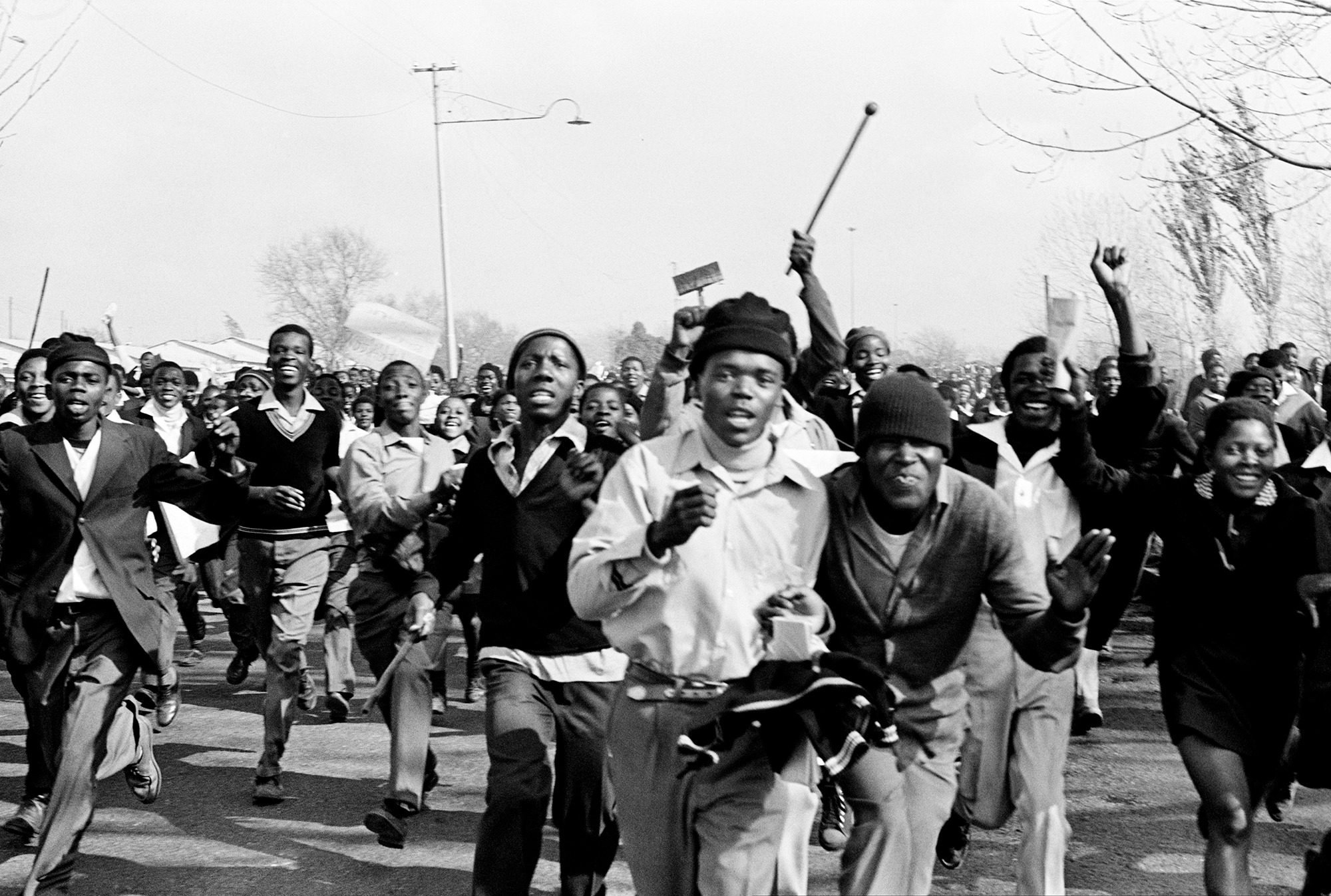
On June 16, 1976, thousands of students marched through Soweto to protest the apartheid government’s decision to enforce Afrikaans as the medium of instruction in Black schools. They were not asking for luxury. They were asking to learn in a language they understood. They were asking to be treated as human beings worthy of a real education.
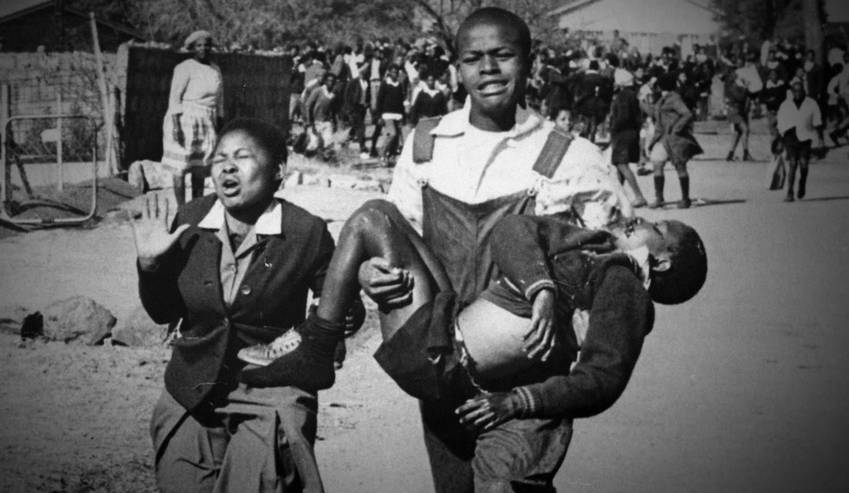
The apartheid state’s response was to open fire on them. Hector Pieterson was thirteen years old when the bullet found him. Sam Nzima’s photograph of his limp body being carried by Mbuyisa Makhubo became the image that showed the world what apartheid was truly capable of. It travelled across continents. It could not be unseen.
Almost fifty years later, the children of South Africa are still fighting for the right to be educated. But something has changed. The enemy is no longer as easy to identify. It no longer wears a uniform. It carries a budget speech instead of a gun.
The Bantu Education Act of 1953 was one of apartheid’s most calculated weapons. Designed by Hendrik Verwoerd, then Minister of Native Affairs, it deliberately engineered an inferior education system for Black children. The goal was explicit. Verwoerd himself said, and history has never let him forget it, that there was no place for the Native in European society above certain forms of labour. The education given to Black children was, by design, an education that prepared them for servitude and nothing more.
Black schools were underfunded, overcrowded, and stripped of resources. Teachers were underpaid and undertrained. The curriculum was gutted of critical thought. The books were old. The classrooms were crumbling. It was not education. It was conditioning. It was a system designed to produce workers who would not ask questions and citizens who would not demand rights.
By 1976, the fury had been building for years. The students had watched their parents work themselves to exhaustion for wages that could not build futures. They had watched the land their families once owned get absorbed into a state that told them they were guests in their own birthplace. When the government announced that mathematics and social studies would be taught in Afrikaans, a language most Black students and teachers barely spoke and certainly had not chosen, it was the match dropped onto a powder keg that had been filling for decades.
The marchers that day were not criminals. They were children. Some wore school uniforms. They carried signs. They sang. And they were shot for it. The uprising spread from Soweto across the country. Over the following months, the South African Institute of Race Relations recorded that over 600 people were killed, though activists of the era have long argued the true number was higher. Thousands were arrested. Children were detained without trial. The machinery of apartheid came down hard on a generation that had dared to say no.
But the spirit of that generation did not die in the dust of Orlando West. It fed into the consciousness of a country that was slowly, painfully, waking up. It fed into the international isolation of the apartheid regime. It fed into the unbanning of political organisations, the release of Nelson Mandela, and in 1994, into the birth of a democratic South Africa that was supposed to be different.
The promise was simple. Never again would a child in this country be denied an education because of who they are or where they come from. That promise has been broken.
The students of 2015 knew this. The #FeesMustFall movement that swept South African universities was not born out of comfort or convenience. It was born out of desperation. Students who had clawed their way into university, first generation graduates in families that had sacrificed everything, were being told that fees had gone up again. That they did not qualify for funding. That they needed to pay historical debt before they could register for the next semester. That the system, the democratic, post apartheid, supposedly transformed system, did not have room for them either.
The protests were not about entitlement. They were about arithmetic. When the cost of a university degree rises faster than the income of the people who need it most, the mathematics of transformation does not work. The students knew it. They said it loudly. They occupied buildings, they shut down campuses, they marched to Union Buildings. Some were arrested. Some were beaten by private security. Some were rubber bulleted by South African Police Service officers on the grounds of institutions that were supposed to liberate minds.
Mcebo Dlamini, one of the most prominent voices of the #FeesMustFall movement, was among those arrested. He has spoken about this in terms that are hard to argue with. In a conversation on the MacG Podcast, Dlamini reflected on what has become of the gains that activists fought for and said, with the kind of weariness that only comes from watching history repeat itself, that the changes they brought to universities as FeesMustFall activists have been reversed. The concessions won through protests, through sacrifice, through students being arrested and beaten and expelled, have quietly been undone. The system waited them out.
“The changes that they brought to universities as FeesMustFall activists have been reversed.” — Mcebo Dlamini, MacG Podcast
That is the nature of institutional power. It does not need to defeat you in a moment. It just needs to outlast you. It needs you to graduate, to get a job, to get tired, and to stop showing up. Then it slowly rolls back everything you won and calls it administrative adjustment.
The free higher education policy introduced under President Zuma in December 2017, which extended NSFAS coverage to students from households earning under R350,000 per year, was a direct product of that student pressure. It was not given freely. It was extracted through struggle. And it was supposed to be the beginning of something, not the ceiling.
Instead, it became the ceiling. NSFAS, the National Student Financial Aid Scheme, which was supposed to be the bridge between apartheid’s legacy of inequality and a genuinely accessible future, is dismantling that bridge in real time. Reports from 2024 and into 2025 have confirmed what students have been saying for months at the tops of their voices. NSFAS is defunding students mid semester. Some students have had their monthly allowances cut off without warning during examination periods, with no functional appeal process and no explanation that makes sense to someone who cannot eat or pay rent.
Think about what that means in practice. You have studied for months. You have sacrificed sleep, socialising, sometimes your mental health. You sit down to write your final examination. And you find out that the money meant to keep you housed and fed while you do this has been stopped. Not because you failed. Not because you did something wrong. Because a system that was never properly resourced or staffed has decided, through some process you cannot access or understand, that you are no longer eligible. You cannot focus on the exam question in front of you because you are doing the maths of where you will sleep tonight. You write the paper anyway because what else do you do.
That is not a malfunction of the system. That is the system working exactly as it was built to, which is to say, not for you.
In January 2025, a situation unfolded at Addington Hospital in Durban that crystallised a tension South Africans have been navigating for years, often badly. Reports emerged that undocumented foreign nationals were accessing state hospital facilities alongside South African citizens who were being turned away or left waiting for hours. The anger that followed was immediate and visceral. It spread across social media, across taxi ranks, across kitchen tables. The details and framing of the incident were contested by health department officials and civil society groups, but the underlying frustration was not manufactured. It had been building for years.
The same frustration is playing out in education. South African students, citizens of the country their grandparents bled to liberate, are being denied access to state funded education because of underfunded systems, bureaucratic failures, and policy gaps that the government has refused to close with any urgency. Meanwhile, questions persist about the documentation status of learners in the basic education system, a situation the Department of Basic Education has handled with no coherence and no consistency, leaving school communities to absorb a tension that national government created and refuses to manage.
To be clear, this is not an argument against migrants or foreign nationals as people. Many of them are themselves running from governments that failed them just as badly as ours is failing us. The anger belongs at the feet of a government that has allowed systems to collapse to the point where citizens feel like they are competing for scraps. It is the government that made South Africans feel like there is only one loaf of bread and too many people in the queue. It is the government that should have been building the bakery all along. Instead, it has been making speeches about bread.
When young South Africans turn on foreign nationals out of frustration, they are not doing so because xenophobia is in their nature. They are doing so because a government has handed them a crisis and not handed them any tools to solve it. The target of that anger is misplaced, but the anger itself is not. The anger belongs in Pretoria. It belongs in Luthuli House. It belongs at every NSFAS boardroom meeting where students were defunded without a phone call.
As NSFAS funding crises deepened and student protests escalated across campuses in 2024, the government’s response was almost choreographed in its inadequacy. Task teams were announced. Press conferences were held. The Minister of Higher Education spoke of urgent interventions. The Director General gave assurances. The NSFAS board released statements that used the word normalisation repeatedly, as though the problem was a matter of public perception rather than students being unable to eat.
Students at Walter Sisulu University who were cut off mid semester kept being cut off. Students at Tshwane University of Technology who could not register because of accumulated historical debt remained excluded. Students at the University of Fort Hare, one of the oldest and most symbolically significant Black universities in Africa, the institution that produced Nelson Mandela and Oliver Tambo, reported similar experiences. The words of reassurance reached the podium. The money did not reach the students.
This is what political gaslighting looks like in practice. You are told the system is being fixed while you are still being broken by it. You are told that your complaint has been escalated while your account remains frozen. You are invited to call a hotline that does not answer. You are directed to a portal that does not load. You are told to be patient while your patience runs out at exactly the same rate as your airtime and your groceries.
And then on June 16, they invoke the memory of Hector Pieterson. They quote the speeches of Tsietsi Mashinini. They talk about the courage of a generation. They light candles and they wear black and they say never again. They say it while knowing that right now, today, there are South African students who cannot afford to eat while studying for the examinations that are supposed to be their way out of the poverty that apartheid engineered and democracy was supposed to dismantle. They know. And they stand at the podium anyway.
The uniform is different. The indifference is exactly the same.
Let this be said carefully and deliberately, because it deserves to be said without exaggeration. The democratic government of South Africa is not the apartheid government. The apartheid regime was a codified, constitutionally enshrined system of racial oppression that used the full machinery of the state, including its military and its police and its courts, to dehumanise Black people as a matter of official law. The post 1994 government operates under a Constitution that is among the most progressive in the world, one that explicitly commits the state to the progressive realisation of socioeconomic rights including education. That distinction is real and it matters.
But distinctions of intention do not erase similarities of outcome. When you look at who is excluded from higher education in South Africa today, it is still overwhelmingly Black students from poor and working class households. When you look at who bears the cost of NSFAS failures, it is not the children of the political class. When you look at who is arrested during student protests, it is not the children of Cabinet ministers. The architecture of exclusion has been refurbished. The floor plan is recognisable.
The apartheid government denied Black children a quality education through law. The democratic government is denying Black children a quality education through policy failure, administrative collapse, and the sustained underfunding of institutions that were supposed to be the instruments of transformation. The mechanism is different. The people left outside are the same people. And when a government that claims to carry the legacy of liberation continues to produce conditions that the liberators died to prevent, it must be named for what it is. It is a betrayal. It is a reversal. It is the same pain wearing a different uniform.
“The blood of 1976 was not shed so that a different government could fail us in a more administratively sophisticated way.”
The gains of #FeesMustFall were never as permanent as they felt in the moment. The zero percent fee increase commitments that universities agreed to under pressure from the 2015 and 2016 protests were quietly abandoned within a few years. NSFAS expanded its coverage but not its administrative capacity, creating a system that promised more than it could deliver and then punished the students who depended on those promises. The policy of free higher education for the poor, which was supposed to be a foundation, became a talking point.
Mcebo Dlamini said what many are afraid to say plainly. On the MacG Podcast, reflecting on the decade since Fees Must Fall began, he noted that the changes they brought to universities have been reversed. Not undone overnight. Not in a single dramatic act of bad faith. Reversed slowly, bureaucratically, meeting by meeting and policy memo by policy memo, in the way that institutions always reverse things when they have decided the people who won those changes are no longer watching.
The students who were in primary school when those protests happened are now at university. They inherited the gains without inheriting the context. They were told the battle was won. They arrived and found the door half open. They arrived and found that the same questions their predecessors fought about, fees, accommodation, food, funding, access, are still the questions. They arrived and found out that a promise made under pressure is not the same as a promise kept.
When Dlamini says the changes have been reversed, he is not being dramatic. He is describing what a generation of students is living inside every single day. He is describing the exam you wrote while hungry. He is describing the registration you could not complete because of a debt your family could not pay. He is describing the year you lost because NSFAS took three months to process your appeal and your semester was already over by the time they replied.
On June 16, 1976, children died for the right to an education that treated them as full human beings. They did not die so that fifty years later a different government, one that carries their photographs to rallies and names schools after their fallen friends, could fail the next generation in a more polished and bureaucratic way. They did not die so that their grandchildren could sit in examination halls with financial holds on their accounts and hunger in their stomachs and write papers about a future they are not sure the system wants them to reach.
The blood of 1976 was not shed for nothing. It broke something in the apartheid state that could not be repaired. It seeded a consciousness that eventually produced freedom. But freedom is not the end of the story. Freedom is the beginning of the obligation. And the obligation of a liberated state is to build, genuinely and urgently and without condition, the systems that make freedom real for the people who have been excluded the longest.
South Africa has not done that. It has made speeches about it. It has commissioned reports about it. It has celebrated the anniversaries of the people who demanded it. And then it has gone back to the business of failing the children of those people in ways that are slower and quieter and harder to photograph than a bullet, but no less devastating in their effects.
This June 16, light the candles. Lay the flowers. Sing the songs. Remember the names. But also sit with the question that Hector Pieterson and the class of 1976 would ask if they could stand in an NSFAS appeals office today, if they could see the defunding notices, if they could read the student testimonies, if they could watch the Minister give another press conference while another semester collapses.
Is this what we died for?
The answer should make every person in power deeply, profoundly uncomfortable. Discomfort is the beginning of accountability. And accountability is the only thing that has ever actually changed anything in this country.