11
11
Your 24/7 source for the full mix of South African News. Politics, Business, Community, Trends. All beats, one feed
Your 24/7 source for the full mix of South African News. Politics, Business, Community, Trends. All beats, one feed
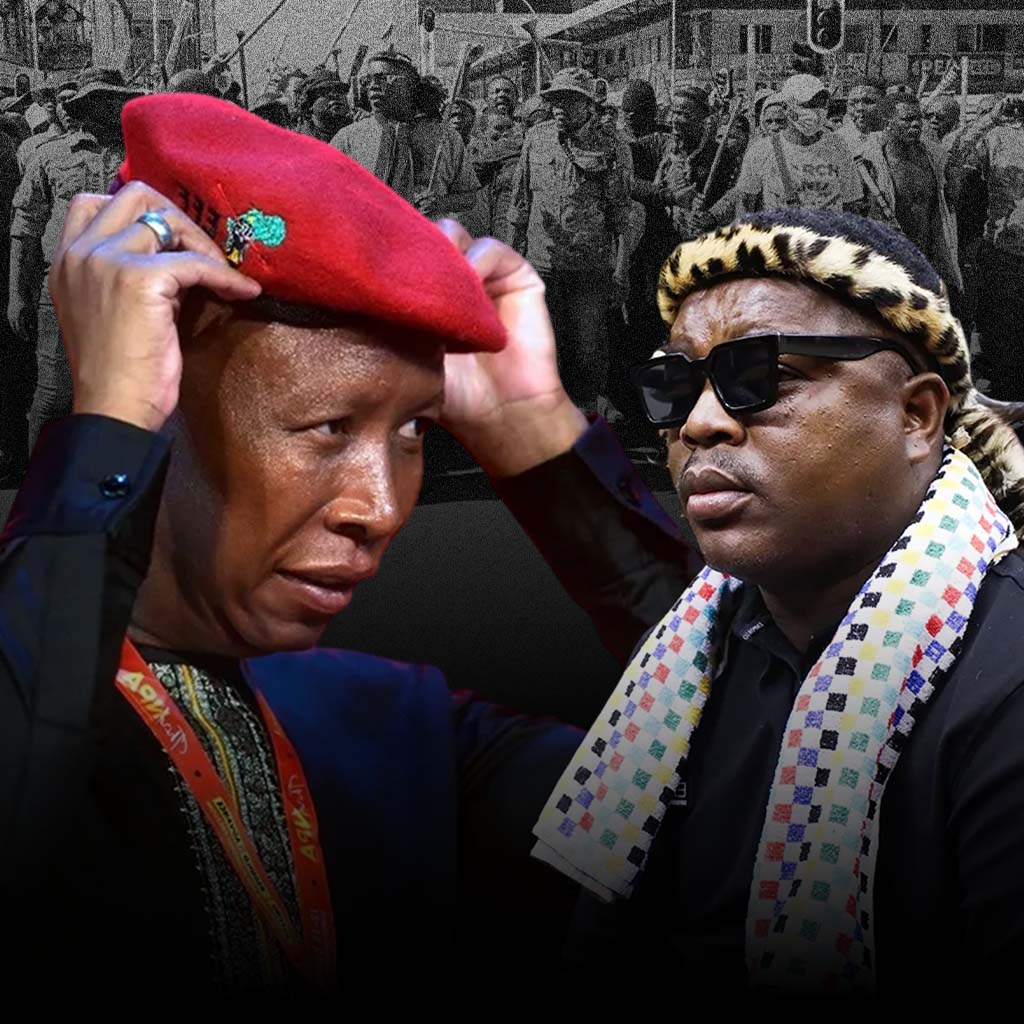
It is no secret that the founder and leader of the Economic Freedom Fighters (EFF) Mr Julius Sello Malema is against the current anti-migrant movement that is currently taking place in South Africa, March and March. He has been very vocal about it; he has made several speeches. So, it should come as no surprise that his tensions with Controversial Social Media Personality Ngizwe Mchunu are motivated; a deliberate use of the courts and wealth to silence the activist and distract from the upcoming 30 June march, a cause he opposes.
SLAPP suits
Malema’s lawfare rooted approach using Strategic Litigation Against Public Participation (SLAPP suits) have shifted the battlefield from the streets to the courtroom to intimidate Mchunu and his followers.
This is believed by Mchunu as in his apology statement he states; “but then he (Malema) did say that the courts run in the palm of his hand. We have also seen his best friend who is also his lawyer and I being appointed to a high position as a judge, we will not say anything then”.
Despite Mchunu’s public apology and retraction, Malema is using the courts to press harder. The contempt ruling and arrest warrant were followed by demands for direct jail time of six months without the option of a fine. This escalation reveals Malema’s intent: not reconciliation, but removal. By pushing for imprisonment, Malema seeks to keep Mchunu off the streets and away from the march.
The 05 June 2026 order stated that a warrant of arrest is issued against Mr Mchunu for his arrest and detention in prison for a period of ten (10) days. However, the arrest warrant would be suspended should he issue an unreserved apology. Mchunu opted to apologize, publicly so, but Malema did not accept the apology, and so Mchunu handed himself over to the authorities for the 10-day sentence.
Had Mchunu been arrested and jailed when he handed himself over to the authorities, he would’ve been out by the time of the 30 June march.
The timing, a coincidence?
The timing of these legal manoeuvres is no coincidence. With the march approaching, Malema’s aggressive pursuit of Mchunu shifts public attention from activist demands to courtroom drama. Instead of focusing on accountability the narrative is dominated by Malema’s reputation and legal victories. This distraction weakens activist energy and sends a message to all activists that if you challenge Malema, you risk financial ruin or jail. This is not about justice; it is about neutralizing opposition to a cause Malema is against.
The Malema vs Mchunu case is a stark example of how political elites can weaponize the law to silence dissent. By leveraging wealth and influence, Malema is not only crushing one activist but also distracting an entire movement from its mission.
As the 30 June march approaches, the question remains: will activists allow the courtroom drama to overshadow their cause, or will they reclaim the narrative from Malema’s lawfare?