 11
11
Your 24/7 source for the full mix of South African News. Politics, Business, Community, Trends. All beats, one feed
Your 24/7 source for the full mix of South African News. Politics, Business, Community, Trends. All beats, one feed
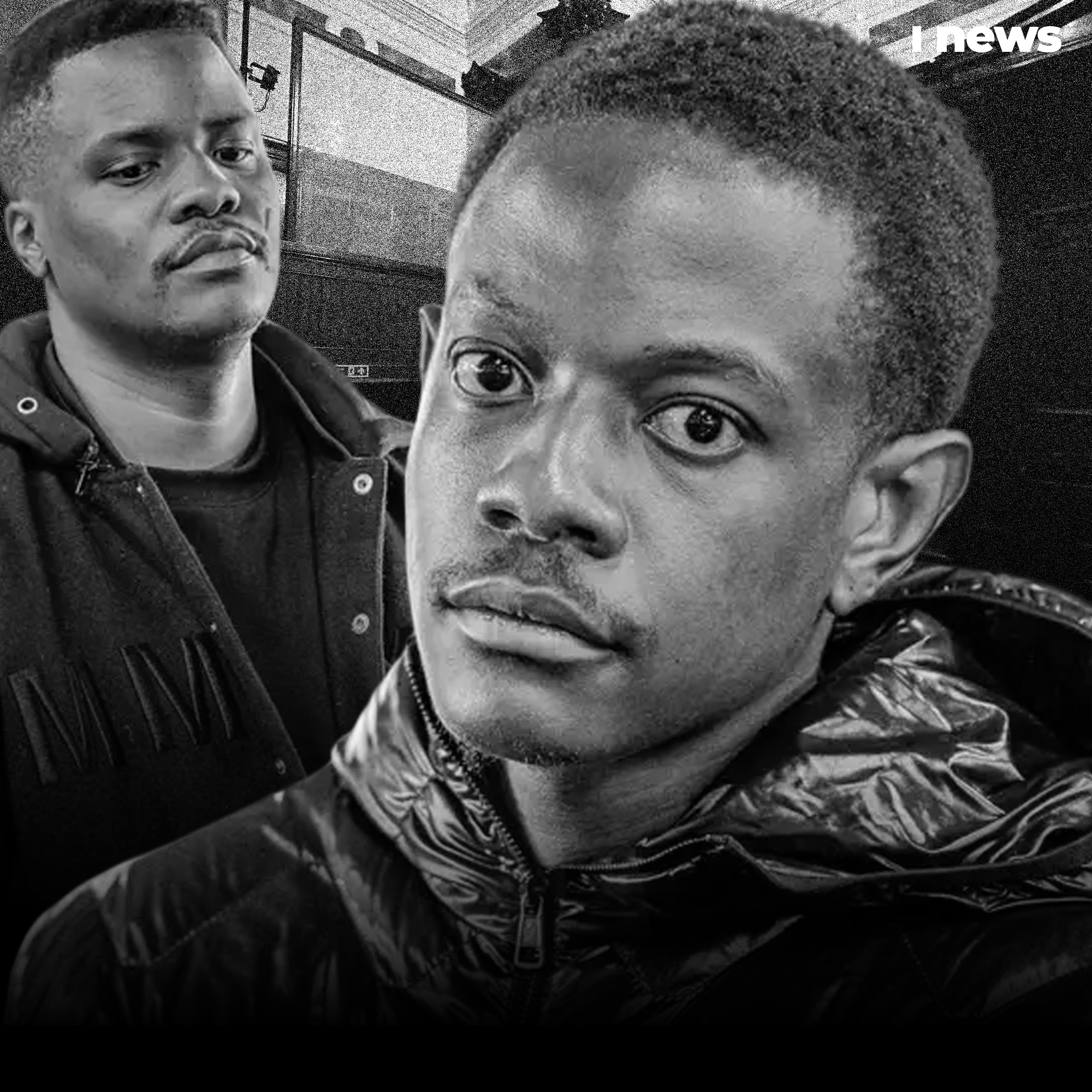
Bellarmine Mugabe, 28, pleaded guilty to two charges and was escorted out of South Africa hours after sentencing, but many argue the outcome was too lenient for the crimes committed.
Bellarmine Chatunga Mugabe, the youngest son of the late Zimbabwean President Robert Mugabe, was fined R600k and immediately deported from South Africa on Wednesday, 29 April 2026. This followed his sentencing at the Alexandra Magistrates’ Court in Johannesburg.
The ruling, handed down by Magistrate Renier Boshoff, drew swift public criticism, with many South Africans and legal observers arguing that the outcome did not go far enough for a case rooted in violence.
The case stems from an incident on 19 February 2026 at Mugabe’s luxury residence in Hyde Park, one of Johannesburg’s most affluent suburbs. During an altercation with a security guard, Sipho Mahlangu, 23, was shot twice in the back while attempting to flee the property.
Mugabe’s cousin and co-accused, Tobias Matonhodze, 33, was later confirmed through forensic evidence, including gunshot residue found on his hands, to have fired the shots.
Mugabe, 28, pleaded guilty to two charges: contravening the Immigration Act, having been found to be residing in South Africa unlawfully over a prolonged period despite a prior denial of entry, and pointing an object, a replica firearm, in a manner that led the victim to believe it was real, in a separate earlier incident in Hyde Park.
For this, Mugabe was sentenced to R400k or 24 months imprisonment for the firearm charge, and R200k or 18 months’ imprisonment for the immigration offence.
Matonhodze, who pleaded guilty to the more serious charges including attempted murder and unlawful possession of a firearm, was sentenced to three years in prison, after which he too will be deported to Zimbabwe.
Hours after sentencing, Mugabe was escorted by investigating officer Colonel CJ Raj to OR Tambo International Airport, where immigration officials processed his deportation. His legal team remained at the court to coordinate the payment of fines and travel arrangements.
Magistrate Boshoff acknowledged that the sentences were more lenient than usual, citing the guilty pleas and the fact that both men were first-time offenders. The court also heard that Mugabe and Matonhodze had approached the victim prior to sentencing, paying Mahlangu R250k in compensation, with a further R150k still outstanding.
The National Prosecuting Authority (NPA) welcomed the outcome, stating it reaffirmed the State’s commitment to the rule of law and accountability for violent crime.
However, not everyone shared the NPA’s satisfaction. Reaction on social media and among legal commentators was sharp. Critics pointed out that Mugabe, unlike his cousin, faced no jail time whatsoever, walking free from a case involving the shooting of an employee.
Many questioned whether his famous surname and financial resources played a role in the outcome, with one social media user writing:
“You are not tarnishing your father’s name but our country’s name because when the crime stats come, it falls under South Africa.”
Others from Zimbabwe weighed in, lamenting the cost to the country’s already strained dignity: “That R600k could have bought loads of painkillers for rural struggling clinics,” wrote one Zimbabwean commentator.
Magistrate Boshoff himself acknowledged uncertainty about the full picture, stating from the bench that he could not determine whether Matonhodze had “taken the rap” for his cousin, but that he could only rule on the basis of the evidence before him, a remark that further stoked public disquiet.
The judge also notably cited the controversial 2010 Bees Roux case, in which a rugby player received a non-custodial sentence after beating a police officer to death, as legal precedent for the non-custodial sentence.
Robert Mugabe, who died in 2019, remains a deeply polarising figure, celebrated by supporters as a liberation hero who ended white minority rule in Zimbabwe in 1980, and condemned by others as a tyrant whose 37-year rule was marked by repression and economic ruin.
His son Bellarmine, born of his second wife Grace, now returns to Zimbabwe under a cloud that many believe the South African justice system did not do enough to address.