 11
11
Your 24/7 source for the full mix of South African News. Politics, Business, Community, Trends. All beats, one feed
Your 24/7 source for the full mix of South African News. Politics, Business, Community, Trends. All beats, one feed
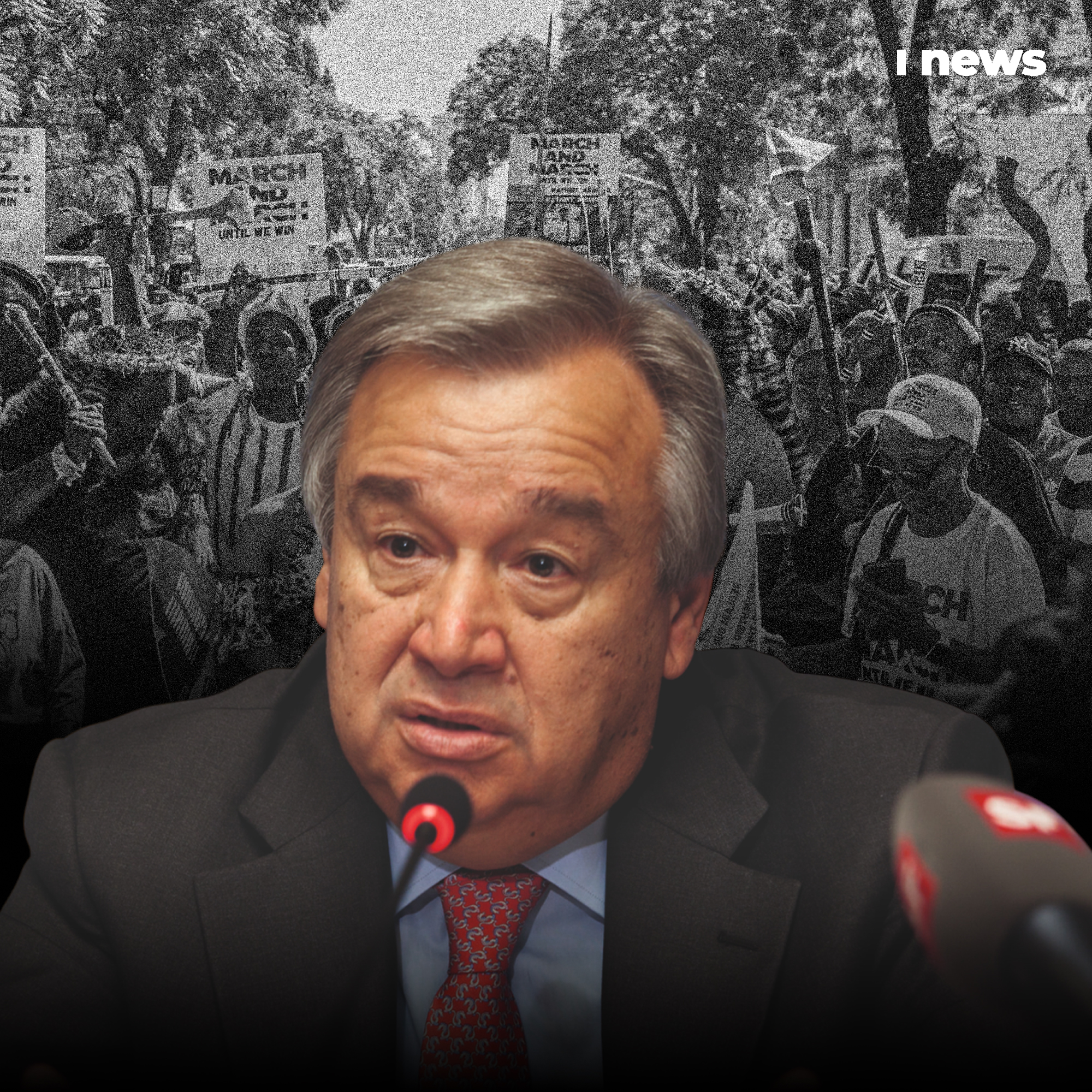
Last month, South Africa celebrated its 32nd anniversary of democracy, but the joyous occasion was tainted by harsh worldwide censure. The KwaZulu-Natal region has been experiencing a “disturbing groundswell” of xenophobic violence and vigilantism, which United Nations (UN) Secretary-General António Guterres has officially denounced as a danger to the fundamentals of an inclusive, democratic society.
The UN’s declaration, which was published on April 28, 2026, emphasises the escalating intolerance issue that has severely strained South Africa’s diplomatic ties, especially with Ghana.
The ongoing turmoil is concentrated on KwaZulu-Natal’s Durban CBD and neighbouring areas and has escalated to other parts of the country, where local vigilante groups are allegedly carrying out “street crackdowns” against unauthorised migrants. After footage of foreign nationals being harassed and intimidated went viral on social media, the issue reached a diplomatic breaking point.
In one well-known instance, a group accosted a Ghanaian native and demanded documentation of his legal status before telling him to “fix his country” and leave. Samuel Okudzeto Ablakwa, Ghana’s Foreign Affairs Minister, summoned South Africa’s envoy to Accra last Thursday in response to these recordings, demanding immediate action to stop the situation from getting worse.
For four consecutive days, businesses in the Durban CBD remained closed as tensions between local groupings and foreign nationals escalated into physical confrontations. While some local vendors expressed frustration over the impact on their livelihoods, the broader narrative has been one of fear and scapegoating.
When evaluating the situation, Secretary-General Guterres did not hold back. He stressed that “violence, vigilantism, and all forms of incitement to hatred have no place” in a country run by the rule of law, while wishing South Africa a happy Freedom Day.
The head of the UN voiced grave worry about allegations that people are instigating violence by taking advantage of the challenging socioeconomic circumstances in the nation. Migrant rights activists contend that foreigners are increasingly being exploited as scapegoats for fundamental economic problems in South Africa, where the unemployment rate is above 30%.
South African authorities have pledged to take immediate action against lawlessness in response to growing international criticism. In a recent speech to government officials, Ronald Lamola, Minister of International Relations and Cooperation, declared that intimidation of immigrant populations poses a direct danger to South Africa’s constitutional order.
Lamola echoed the Police Ministry’s view that “acts of lawlessness and violence against migrant communities have no place in our constitutional democracy.” Since then, the South African Police Service (SAPS) has been ordered to take a zero-tolerance approach to intimidation and looting, and to find and prosecute anyone discovered to be instigating or taking part in xenophobic activities.
However, human rights defenders remain skeptical. A 2026 World Report on South Africa suggests that while the government often issues strong condemnatory statements, anti-immigrant sentiment remains high among the public. A recent GovDem survey found that 73% of respondents harbour high levels of mistrust toward African foreign nationals, a statistic that continues to drive harmful rhetoric and vigilante campaigns.
The persistent cycles of xenophobic violence pose a serious PR problem for a country that takes pride in the “Rainbow Nation” ideology. The UN has cautioned that South Africa runs the risk of widening social rifts that might result in even more serious atrocity crimes if these “hothouses of hate” are not addressed.
This increase in xenophobia adds a third, more combustible layer to the nation’s present problems as the suspects in the Lephalale NSFAS fraud case get ready for their court appearance in May and Johannesburg struggles with a trash collection issue.
The international community, led by the UN and the African Union, is now watching closely to see if the promised police crackdown will lead to actual stability, or if Freedom Day 2026 will be remembered as the moment the country’s social fabric began to fray under the pressure of intolerance.