 11
11
Your 24/7 source for the full mix of South African News. Politics, Business, Community, Trends. All beats, one feed
Your 24/7 source for the full mix of South African News. Politics, Business, Community, Trends. All beats, one feed
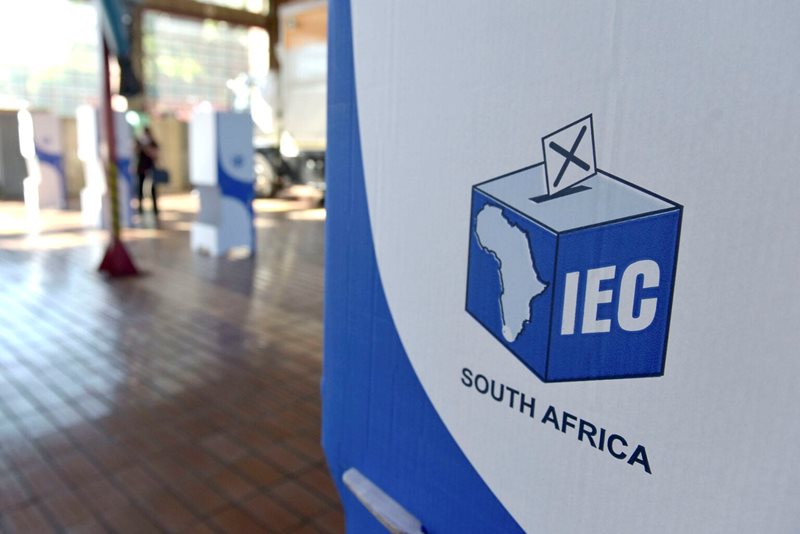
A Mini Guide for South African Youth Who Want to Vote But Don’t Know Where to Start.
Let us be honest about something. Not voting is also a choice, and it is one that someone else benefits from. In South Africa’s 2024 general elections, youth turnout hit its lowest point since democracy began in 1994, with only 58% of registered young voters showing up at the polls. Millions of young people stayed home. Not out of laziness, but often out of genuine confusion. Too many parties. Too many promises. Too much noise. And not enough straightforward guidance on how to cut through it.
This guide is not here to tell you who to vote for. That is your decision and yours alone. What it is here to do is give you the tools to make that decision yourself, clearly and confidently. Because the country that gets built over the next five years will be built on votes cast or not cast by people exactly like you.
THE NUMBERS THAT SHOULD WORRY US ALL
42% of South Africa’s voters’ roll is made up of people aged 18 to 34. That is 11.7 million people.
Only 22% of eligible youth voted in the 2019 general elections.
Youth unemployment sits at 45.5%. That means nearly half of young South Africans have no job and no income.
44% of people aged 16 to 34 are not in employment, education, or training (NEET).
The 2024 election produced a government of national unity because no single party won a majority. That coalition was shaped by who showed up.
Before we talk about how to vote, we need to be honest about why so many young South Africans are not. It is not simply apathy. Research consistently shows that young people care deeply about the issues that affect their lives. The disconnect is between caring about problems and believing that the ballot box is the tool to fix them.
In 2024, 52 parties appeared on the national ballot. Fifty-two. For a first-time voter trying to make a responsible decision, that number is not empowering. It is paralysing. Most of those parties had no meaningful public profile, no accessible manifesto, and no youth outreach strategy. The result is that young voters either pick the most familiar name, follow their family’s tradition, or simply stay home.
South Africa’s youth grew up watching load shedding, school buildings collapse, NSFAS payments arrive late, and youth unemployment climb higher every year. When the parties that oversaw those failures return to campaign, asking for another five years, the cynicism is not irrational. It is earned. Academic research from EISA confirms that the disconnect between democratic promises and tangible outcomes is particularly pronounced among young South Africans, and that persistent unemployment has deepened this disillusionment.
Here is the part nobody says loudly enough. Civic education in South African schools is deeply inadequate. Most young people reach voting age without ever having had a structured conversation about what political parties actually stand for, what a manifesto is, how coalition governments work, or what their vote concretely changes in their community. Nobody taught them. So when election day comes, they guess or they abstain.
The consequences of youth voter abstention are not abstract. They are measurable, and they land directly on the lives of young people.
This is the question most young voters are actually asking, even if they frame it as indifference. Choosing a party is not about picking the most exciting leader or the most familiar logo. It is about matching your own lived priorities to the party that comes closest to addressing them. Here is a practical framework.
Before you look at a single party, make a short list of the three things that affect your life the most right now. Be honest and be specific. For most young South Africans those things tend to include some combination of:
A manifesto is a party’s written commitment to what it will do if elected. Speeches and rallies are performance. The manifesto is the document you can hold them to. Every major party’s manifesto is available free online on the IEC website (www.elections.org.za) and on each party’s own website. You do not have to read the whole thing. Search for the sections on education, employment, and the issues you listed in Step 1. Look for specific commitments, not vague language. ‘We will create jobs’ is not a policy. ‘We will fund 100,000 youth apprenticeship placements by 2027’ is.
Where has a party already governed? What happened in those places? The DA has governed the Western Cape for over a decade. Look at service delivery outcomes there. The ANC has governed nationally since 1994. Look at what improved and what did not. The EFF has been in coalition in municipalities like Johannesburg. Look at what they achieved or blocked. History is the most honest manifesto a party has.
You do not need to be a political science student to understand the basic differences between South Africa’s major parties. Here is a simplified breakdown:
| Party | Core ideology | Key policy positions | Who tends to vote for them |
|---|---|---|---|
| ANC | Liberation movement, social democracy, transformation | BEE, land reform, social grants, national unity | Older black voters, rural communities, ANC loyalists |
| DA | Centre-right, liberal democracy, meritocracy | Clean governance, private sector growth, rule of law | White, coloured, and Indian voters; urban professionals |
| EFF | Radical left, Marxist-Leninist, economic emancipation | Land expropriation, nationalisation of banks and mines, free education | Young black voters, urban poor, students, former ANC supporters |
| MK Party | Populist, Zulu nationalist, anti-establishment | Scrap the current Constitution, nationalise key sectors, Zuma-led change | KwaZulu-Natal communities, Zuma loyalists, disaffected ANC voters |
| ActionSA / RISE / BOSA | Centrist reform, new generation politics | Anti-corruption, youth-focused policies, professional governance | Younger urban voters frustrated with older parties |
South Africa uses a proportional representation system. This means you vote for a party, not a specific person. The percentage of votes a party receives determines how many seats it gets in Parliament or a provincial legislature. Those seats then determine which party leads government or which coalition is formed.
In national and provincial elections you receive two ballot papers:
In local government elections you vote for a ward councillor (a specific person who represents your area) and also for a party. Both ballots matter. The ward councillor is often the most direct line between your community and service delivery, so this election is arguably the one that touches your daily life the most.
You do not need to have all the answers to vote. You do not need to love any party. You do not need to believe that one election will fix everything. What you need is to understand that the people who do vote are deciding the country on behalf of the people who do not.
South Africa is now in a coalition era. The 2024 elections proved that no single party commands a majority anymore. That means every seat matters more than it ever did before. A few thousand votes in a key province can determine which party gets leverage in coalition negotiations, which policies get pushed, and which ones get buried.
The youth of South Africa makes up 42% of the voters’ roll. That is not a footnote. That is a majority waiting to be activated. The question is not whether your vote matters. The question is whether you will use it.
Not voting is a choice. Make sure it is a choice you are making consciously, not one being made for you by a system that counts on your silence.
USEFUL RESOURCES
IEC (Electoral Commission): www.elections.org.za
MyVoteSA App: Available on Android and iOS
ANC Manifesto: www.anc.org.za
DA Manifesto: www.da.org.za
EFF Manifesto: www.effonline.org
RISE Mzansi: www.risemzansi.org
BOSA: www.bosa.org.za