 11
11
Your 24/7 source for the full mix of South African News. Politics, Business, Community, Trends. All beats, one feed
Your 24/7 source for the full mix of South African News. Politics, Business, Community, Trends. All beats, one feed
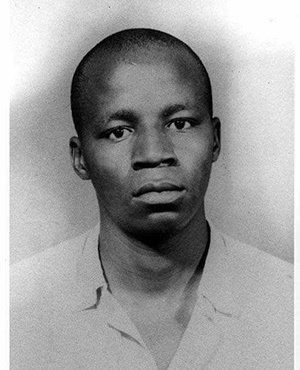
It has been forty-seven years since the apartheid regime dragged a 22-year-old to the gallows at Pretoria Central Prison and hanged by neck to his death. His name was Solomon Kalushi Mahlangu, the day was 06 April 1979. Apartheid killed him.
Kalushi was not a murder, he was a soldier. And his trial, conviction and execution remain one of the most grotesque injustices In South Africa’s brutal history, this was a judicial assassination dressed in legal robes.
His story, similar to many. Kalushi, a young uMkhonto weSizwe (MK) operative, had just been in South Africa for 2 years from his military training in Angola and Mozambique in 1977. He was tasked with helping students commemorate the 1967 uprisings.
His arrest came on a Friday night in September; he and two comrades were accosted by police in a Johannesburg suburb. A gunfight erupted. Two civilians were caught in the crossfire and killed.
During his arrest he was with Monty Motlaung. The third man escaped. Motlaung was so severely beaten by police that he suffered permanent brain damage and was deemed unfit to stand trial. Only Mahlangu, the one who did not fire a single shot, was left to face the full, unyielding weight of the apartheid judiciary.
What followed was not a trial. It was a ritual. The verdict was a foregone conclusion. Mahlangu was found guilty of murder under the common law and the Terrorism Act, despite the prosecution conceding he had not killed anyone. In the twisted logic of the regime, he was “equally liable” a legal fig leaf for a political execution.
He was sentenced to death.
The international community recoiled in horror. Appeals poured in from foreign leaders, including US President Jimmy Carter, and from bodies like the United Nations, pleading for clemency. They were ignored. The Rand Supreme Court refused him leave to appeal. On that April morning in 1979, the state extinguished a life that had barely begun.
But before they tightened the noose, Solomon Mahlangu spoke. His final words have echoed down the decades, becoming a sacred text of the liberation struggle: “My blood will nourish the tree that will bear the fruits of freedom. Tell my people that I love them. They must continue the fight.”
And his blood did nourish that tree. His sacrifice became a rallying cry. His face became an icon. In 2005, the democratic government posthumously awarded him the Order of Mendi for Bravery in Gold, our highest honour for courage and sacrifice.
But a strange thing happened on the way to canonisation. The family never fully accepted the official story. They harboured doubts whispers passed down through generations that Solomon Mahlangu was not hanged at all but was “finished off” by three bullets while in custody.
In 2022, on the 43rd anniversary of his death, the family finally opened an inquest. They wanted the truth, not just the myth. They pointed to the case of Ahmed Timol, another anti-apartheid activist whose 1971 “suicide” was overturned by a 2017 inquest that found he had been murdered by apartheid police. The Mahlangu family asked: why should our son be any different?
Now, on this 47th anniversary, the family is once again demanding justice. This week, they reiterated their call for the case to be revisited, insisting the truth be fully revealed in line with Truth and Reconciliation Commission recommendations. “The Mahlangu family has reservations regarding the death of the struggle icon and opening an inquest would be the best way of giving them peace of mind,” a family spokesperson said. They have vowed to fight “across generations until justice was served.”
And yet, the state has been conspicuously quiet. The ANC, which has built so much of its moral authority on the martyrs of the struggle, has offered platitudes but no action. This week, Secretary-General Fikile Mbalula stood at Mahlangu’s grave in Mamelodi and praised him as a hero who “stood in the gallows firm.” But standing at a graveside is not justice. Commissioning a statue is not justice. Naming a square is not justice. Justice is a proper, independent, transparent inquest. Justice is answering the family’s questions. Justice is exhuming the body if necessary and finally establishing, once and for all, how Solomon Mahlangu died.
Because here is the uncomfortable truth that the comfortable commemorations often gloss over: if the state even the democratic, post-apartheid state refuses to fully investigate the circumstances of his death, it is complicit in the cover-up. The apartheid regime killed Solomon Mahlangu. But it is our generation, 47 years later, that risks burying the truth for good.
We owe it to him to do better. His final words were not just a promise of liberation; they were a command: “Tell my people that I love them. They must continue the fight.”
That fight is not over. It will not be over until the full, unvarnished truth of his death is known and acknowledged. Until then, his blood continues to nourish a tree whose fruit remains, in one crucial respect, bitterly out of reach.
Mahlangu’s family has challenged the apartheid verdict citing the truth needs to be revealed.